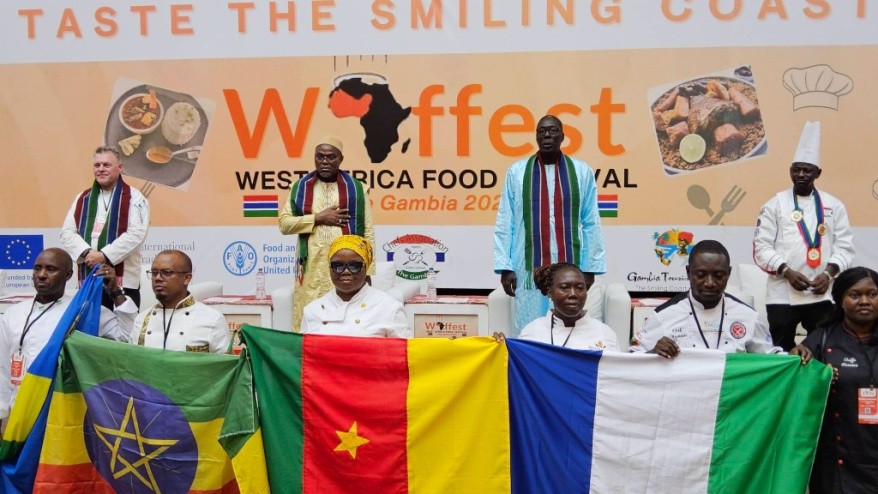
The 8th edition of the West Africa Food Festival (WAFFEST) opened on 16 October 2026 at the Sir Dawda Kairaba Jawara International Conference Centre in Banjul. Running from 15 October to 21 October 2026, the event gathers participants to celebrate regional culinary traditions. The festival is being held at the Sir Dawda Kairaba Jawara International Conference Centre in Banjul. The festival runs from October 15 to October 21, 2026.
Siaka Fadera, Deputy Permanent Secretary at the Ministry of Tourism, Arts and Culture, stated: "WAFFEST provides a valuable platform to preserve our culinary heritage, strengthen regional cooperation, and showcase the potential of West African cuisine to the world."
Vice President Mohammed B.S. Jallow added: "Across West Africa, culinary traditions unite communities, preserve culture and sustain livelihoods. WAFFEST offers an important platform to celebrate our culinary diversity, strengthen regional cooperation and promote gastronomy as a driver of tourism and economic growth."
Theme and Global Participation
Organizers selected the theme 'Developing Skills, Changing Lives' for the 2026 edition of the festival. The theme of the 2026 edition is 'Developing Skills, Changing Lives'. This focus aims to link professional culinary training with broader socio-economic development across the region. By prioritizing skill acquisition, the event organizers intend to foster long-term improvements in the professional standards of the regional food industry.
Chefs from over 30 countries are participating in the event to share techniques and represent their respective culinary traditions. The presence of these international delegates ensures that a wide array of cooking styles and cultural practices are represented throughout the week. Chef Saun Smith, President of the African Chef Alliance, described the gathering's significance during the opening ceremonies. "It is a celebration of our shared culinary heritage as Africans, as people of African descent across the continent and across the world," said Smith.
The participation of these international representatives reflects an effort to broaden the reach of West African gastronomic practices. Through these collaborative sessions, the festival connects local practitioners with a global network of professionals. Participants engage in various demonstrations and workshops designed to highlight the intersection of tradition and modern culinary techniques. By facilitating these exchanges, the festival aims to elevate the profile of local ingredients and traditional preparation methods on the international stage.
The gathering serves as a nexus for stakeholders to discuss the future of regional food systems and the role of professional training in enhancing the economic viability of the culinary sector. As chefs from diverse backgrounds exchange knowledge, the event shows the importance of culinary arts as a tool for cultural preservation. The collaborative atmosphere at the Sir Dawda Kairaba Jawara International Conference Centre remains a key feature, allowing for direct interaction between industry leaders and emerging culinary talents. This convergence of expertise supports the overall mission of the festival to promote gastronomy as a vital component of regional development.