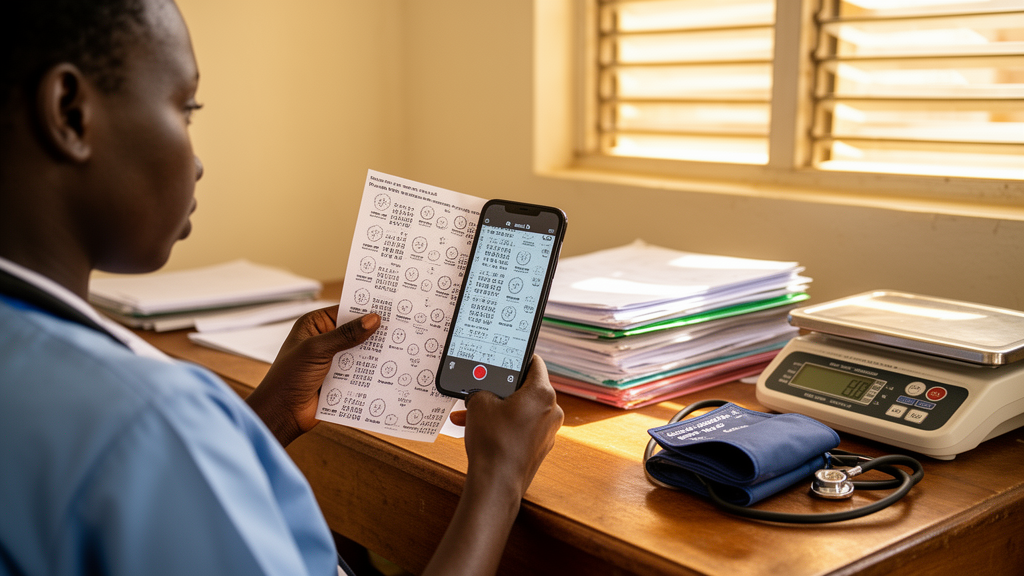
Researchers conducted a qualitative implementation study of Smart Paper Technology in The Gambia between September and December 2024. The project evaluated the implementation of this technology across two pilot facilities located in the Western Region of The Gambia. Results from the study were published in the journal PLOS Global Public Health, 6(10), e0006244 on October 23, 2026. The investigation utilized NVivo software to manage data collected during the assessment of the digital health tools. By examining the performance of these facilities, the research team aimed to determine the viability of integrating Smart Paper Technology into maternal health services. These findings provide insight into the practical application of the system within local clinical environments.
How the System Functions
Smart Paper Technology functions through the scanning and capturing of paper-based clinical documents into an integrated electronic system. This process allows health workers in the Western Region to convert manual patient records into digital data that the facility can store and access. By digitizing existing documentation, the system minimizes the need for manual data entry while maintaining the original paper charts for clinical reference. Researchers note that this workflow bridges the gap between traditional record-keeping practices and modern digital health infrastructure. The transition enables clinics to preserve established documentation methods while gaining the analytical benefits of an electronic database. This approach ensures that maternal health information remains accessible to medical staff throughout the care process in The Gambia.
Study Methodology and Scope
The research team conducted 30 semi-structured interviews and four focus group discussions to evaluate the deployment of Smart Paper Technology. These qualitative sessions involved 30 participants, including clinicians and administrative staff operating within the two pilot facilities in the Western Region of The Gambia. By utilizing these primary data collection methods, investigators sought to capture direct experiences regarding the transition from traditional paper records to the integrated digital system.
The study identified specific operational challenges that impacted the effectiveness of the technology during the implementation phase. Researchers observed that uneven training coverage left some staff members without sufficient guidance on how to manage the scanning equipment or the associated software. This discrepancy in knowledge contributed to difficulties in adopting the new workflow, particularly for personnel who had not received formal instruction on the system.
Data analysis revealed that health workers frequently engaged in periods of dual documentation. Because staff maintained both the original paper charts and the digital electronic versions, the time required for record-keeping increased rather than decreased during the initial months of the project. This requirement to perform redundant tasks was cited as a primary friction point in clinical environments where time is limited.
Limited internet connectivity further complicated the integration process, as the system relies on network access to transmit scanned data into the electronic database. When connections were unstable or unavailable, health workers faced delays in uploading patient information, which prevented the real-time synchronization of records. Additionally, the study documented instances of scanning errors. These technical inaccuracies occurred when documents were not captured correctly by the hardware, leading to corrupted digital files or incomplete patient histories. Investigators noted that these obstacles represent significant hurdles for the long-term sustainability of the technology within local health clinics. The findings indicate that addressing these technical and procedural barriers is necessary for the system to function as intended within the maternal health services infrastructure in The Gambia.